Wildlife and Countryside Link PFAS0099
Wildlife and Countryside Link evidence to the Environmental Audit Committee on PFAS
The following response is coordinated by Wildlife and Countryside Link, the largest environmental coalition in England, and is supported by the following members of its chemical taskforce group: the Angling Trust, Buglife, Fidra, Pesticide Action Network UK, the Pesticide Collaboration, Rivers Trust, RSPB, and Surfers Against Sewage.
Understanding the threats and benefits from using Perfluoroalkyl and Polyfluoroalkyl Substances (PFAS)
PFAS are used in a wide range of products from food packaging to clothes and cosmetics, due to their heat-, grease- and water-resistant properties. But, due to their highly persistent nature, leaching into water systems from manufacture, use, and disposal, and known links to human and wildlife health problems, this broad use poses significant risks.
Environment and health NGOs are united in calling for a universal PFAS restriction, in line with EU proposals, which bans PFAS from all but the most vital uses (with a phase-out period for exceptional uses - such as medical equipment).[1] This should be a commitment within the revised Environmental Improvement Plan currently under Government consideration.
Water-testing: The Environment Agency is under-resourced to deliver the extensive river and biota monitoring needed on PFAS and other chemicals. Monitoring and analysis is already falling short, and is expected to worsen with likely budget reductions in the Spending Review.
Of 10,000+ known PFAS, the Environment Agency tests for 46, with 4 PFAS (PFOA, PFOS, PFPeA and PFHxA) the most frequently detected. Testing doesn’t include 6:2 FTOH - 1H,1H,2H,2H-Perfluorohexano or 8:2 FTOH -1H,1H,2H,2H-Perfluorooctanol. These are 2 of 24 PFAS that form the basis of a proposed new EU Environmental Quality Standard on PFAS in combination, which aims to protect people and wildlife from PFAS cumulative effect. This means the UK couldn’t fully assess PFAS safety levels under this new metric without enhanced testing.
Freshwater monitoring is patchy and inconsistent and bathing waters are not required to be tested for PFAS. The number of freshwater sites tested has also declined. The number of Water Quality Archive sites tested for PFAS fell by 6% between 2019 and 2024, a reduction of over 1,100 sites. Environment Agency monitoring equipment is also becoming outdated, not sensitive enough to detect PFAS amounts at the levels the EU is proposing as necessary for safety. Meaning a potential underestimation of the number of water sites containing PFAS at unsafe levels.
Bridging monitoring and analysis gaps would need a significant Environment Agency funding boost.
Pesticides: Various PFAS are ingredients in pesticides, either as active substances or co-formulants. Around 12% (37) of the synthetic active ingredients authorised for pesticide use in the EU are PFAS, with a similar picture in the UK.[2] Monitoring of pesticide run-off into rivers is particularly problematic in the current testing regime. This largely occurs during periods of high rainfall. But the Environment Agency’s manual testing is unable to be conducted during such weather events to protect staff safety. Static, high frequency river testing is possible but has higher costs. The Agency has made some moves in this direction but is hampered by limited budget.
Identifying harmful PFAS chemical cocktails: Hazardous PFAS chemical combinations should be identified through regulation (where a Mixture Assessment Factor test could be used in the product approval process). PFAS chemical cocktails, known to be hazardous to wildlife, are present in over 1600 river and groundwater sites.[3] But more assessment of chemical cocktails in water and their impact is needed, with a huge evidence gap.
Sewage sludge: Sewage sludge is sold to farmers as a low-cost fertiliser. Around 87% of the 3.6 million tonnes of sewage sludge produced in the UK each year is applied to agricultural land.[4] This contains nutrients, however as a waste-product from water treatment plants it can also contain a high amount of chemical residues.
Research globally has highlighted significantly elevated levels of PFAS in sewage sludge.[5] Both soil and water PFAS pollution are linked to crop contamination. And the combined effects of PFAS have been found to alter microbial community functions and reduce the biodiversity and connectivity of soil bacteria.[6] Some areas have taken action, for example some US states (such as Maine) have banned the application of sewage sludge to farmland due to the presence of PFAS, with US legal action on sewage sludge.[7]
Yet despite this, UK sewage sludge regulation focuses on heavy metals, with PFAS and other hazardous chemicals poorly monitored. The Environment Agency has stated it is reviewing the regulations but the timescale is indefinite.
Public health: Though the health risks of PFAS are well demonstrated, there is limited public data being identified and utilised on UK public contamination. In other European countries there has been large-scale blood and hair screening, both through Government and academic testing. These studies have shown that the European population is widely exposed to PFAS, and this has been used as proxy data by UK authorities.
Some testing has been conducted recently by the UK Health Security Agency as part of a Partnership project. But this is yet to be published. PFAS volumes that could potentially present an increased health risk were detected in more than half of the participants’ samples in a snapshot chemical hair and blood testing study in 2024 by Wildlife and Countryside Link. And academic studies have found PFAS detected almost ubiquitously in UK study participants including pregnant women and unborn babies.
Food safety: Environment Agency data shows that food in UK supermarkets is contaminated with PFAS residues. But unlike in the EU there are no thresholds for PFAS exposure in the UK and no restrictions on PFAS in food packaging being taken forward currently. This means monitoring, assessing and enforcing safe levels in UK food and packaging has severe limitations. NGOs have urged the Food Standards Agency and Food Standards Scotland to align with EU standards on assumed safe levels of exposure, and match bans introduced on PFAS in food and food packaging.[8]
4. How sophisticated is current knowledge of how and where PFAS enter the supply chain?
Knowledge on exact supply chain entry is limited. But PFAS is ubiquitous in the UK environment. PFAS is a massive issue for nature globally and in the UK, with over 600 wildlife species (from crabs, cod and seals, to otters, buzzards and voles) demonstrated to be facing harm from exposure. As PFAS are so mobile and persistent, pollution from the UK could also affect other countries, for example through marine pollution or exported product contamination.
In terms of supply chains unexpected PFAS pollution impacts have been identified through independent research rather than official process. For example, studies revealed PFAS has made its way into the toilet roll production process either through contamination via roller lubricants and/or the use of polluted recycled paper. PFAS was present in every brand tested and shown to be a significant waste water PFAS pollutant.
Some consumer goods manufacturers, such as Patagonia, are working to track and avoid PFAS in their production process. But there are no requirements for manufacturers as a whole. An effective tracking and reporting system could be useful to identify the upstream sources of PFAS pollution and provide a route to a ‘polluter pays’ Extended Producer Responsibility mechanism. But as there are finite resources from Government on chemical action, environment groups believe the top priority for funding and resource should be towards a universal restriction as the most effective PFAS reduction measure.
5. No response
6. To what extent are the Environment Agency, and other relevant UK bodies and research institutions, resourced to understand the current threat posed by PFAS and to monitor their impact going forward?
EU REACH has a multi-billion pound annual resource which is impossible for UK REACH to replicate.
Regulators are already under-resourced, and as Defra is one of the few ‘unprotected’ Government departments it is often targeted in austerity budget cuts, with real term cuts of around 45 percent during 2009-10 and 2018-19. Defra again faces the prospect of significant Spending Review cuts in 2025 with potential implications for monitoring and assessing the risks of PFAS and other chemicals.
Lack of resources is contributing to a growing chemical protection gap compared to other countries. Since leaving the EU’s chemical regulation system the UK has registered no Substances of Very High Concern for additional action (compared to 38 in the EU), has adopted no new bans or restrictions (compared to 12 in the EU) and at the same time the HSE has deprioritised 12 substances which the EU has current or planned restrictions for. The EU has banned 2 sub groups of PFAS under REACH since the UK exited the EU, while the UK has not banned any.
Protecting the Defra budget would ensure more consistent long-term resourcing. But the UK will never have the capacity to match the scale and pace of the EU on chemicals, especially on PFAS. So in a resource constrained environment the most cost effective option is aligning with the EU. The EU reset negotiations have been positioned as a barrier to chemical alignment - but there is a clear way forward using a Swiss model interim approach.
Given that PFAS are found in pesticides and pharmaceuticals, which both have totally separate regulatory bodies and processes to chemicals via REACH, it is also vital that these silos do not lead to further lack of understanding, reporting of impacts or gaps in action.
The current status of measures to address PFAS
7. What are the current technologies and solutions to treat PFAS pollution, how cost effective and efficient are they and do they create additional risks?
PFAS is highly pervasive and incredibly costly to remove from the environment once present, so restricting PFAS at source is vital.
Remediation costs for problem contamination sites are extremely high, estimated at £400,000 - £29 billion per site[9] and a total cost of up to £121 billion according to an Environment Agency report.
The main remediation processes for PFAS water pollution are water blending (combining water sources to dilute concentrations) and granulated carbon filtration. However, filtration runs the risk of waste (if not dealt with properly) being re-released into the environment. It is also very expensive (with potential for costs to be passed on to water consumers). UK Water Industry Research (UKWIR) estimates new treatment infrastructure would cost approximately £21 billion. It could also result in significant greenhouse gas emissions and is limited in the scale at which it can be deployed.[10]
There are new technologies emerging for PFAS remediation. But ultimately with hugely high costs, prevention is better than cure. A European Commission draft impact assessment found that the costs for companies to reformulate industrial chemicals or switch to safer alternatives pale in comparison to the societal costs of failing to regulate PFAS and other hazardous chemicals. [11]
8. No response
Is the current regulatory regime for PFAS fit for purpose?
9. Is the current regulatory regime for the use and disposal of PFAS, including UK registration, evaluation, authorisation and restriction of chemicals (UK REACH), adequate? If not, how can it be improved?
UK REACH regulates the majority of PFAS use, with use in pesticides and pharmaceuticals regulated differently.
REACH: UK REACH is overstretched and underperforming, resulting in a growing UK protection gap. When directly compared to the EU the UK has weaker PFAS protections on:
● direct restrictions and bans - Since the UK’s departure from the EU, the EU has banned 2 sub groups of PFAS and proposed a universal PFAS restriction, while the UK has only a proposal around PFAS in firefighting foams that has yet to be delivered.
● drinking water - the UK has a voluntary limit of 100 ng/L for 48 PFAS in combination compared to an EU legal limit of 100 ng/L for 20 PFAS in combination.
● food safety - Unlike the EU, the UK has no thresholds for PFAS exposure and no restrictions on PFAS in food packaging being taken forward currently.
● soil protections - with no regulation and limited monitoring of PFAS in sewage sludge, despite 87% of the UK’s sewage sludge used as fertiliser on the country’s farmland.
We would like to see the Government fulfil its pre-election commitment to EU chemical alignment, by enshrining this promise in the Environmental Improvement Plan currently undergoing review. Alignment with EU REACH would be the most cost-effective and immediately impactful solution and allow the UK Government to direct resources to areas where it could potentially exceed EU standards, including an effective polluter pays mechanisms.
Pesticides: There are 31 PFAS active substances approved for use in pesticides with many more PFAS used as adjuvants - substances added to pesticide formulations to enhance their effectiveness. The current regulatory system does not include PFAS in the approval risk assessment process for either pesticide active substances or pesticide products. This is a glaring omission in consumer and environmental protections around PFAS exposure and should be remedied alongside phasing out PFAS in pesticides. A phase-out is entirely possible with alternatives available for all 31 approved PFAS active substances.
The recent EU-UK reset agreement has agreed dynamic alignment with the EU on pesticides. This will see any future EU moves on PFAS pesticides replicated in the UK, but also allows the UK to go further than the EU and show leadership on pesticide protections. This alignment also adds more weight to the need to align PFAS protections more widely through the REACH systems.
The current siloed approach to PFAS regulation - with differing regulation for pesticides, pharmaceuticals and industrial chemicals is problematic. There is a need for all regulatory/approvals processes that affect decisions on PFAS to be joined up and considering the cumulative impacts on human and health and the environment. The silos run the risk of underestimating risk and overestimating progress.
10. Is a precautionary approach to PFAS desirable or is an approach that uses regulation to assess their benefits and risks more appropriate?
Given the expanding wealth of knowledge on environmental and public health impacts from PFAS, a precautionary approach is the most appropriate action:
The environmental impacts of PFAS are vast:
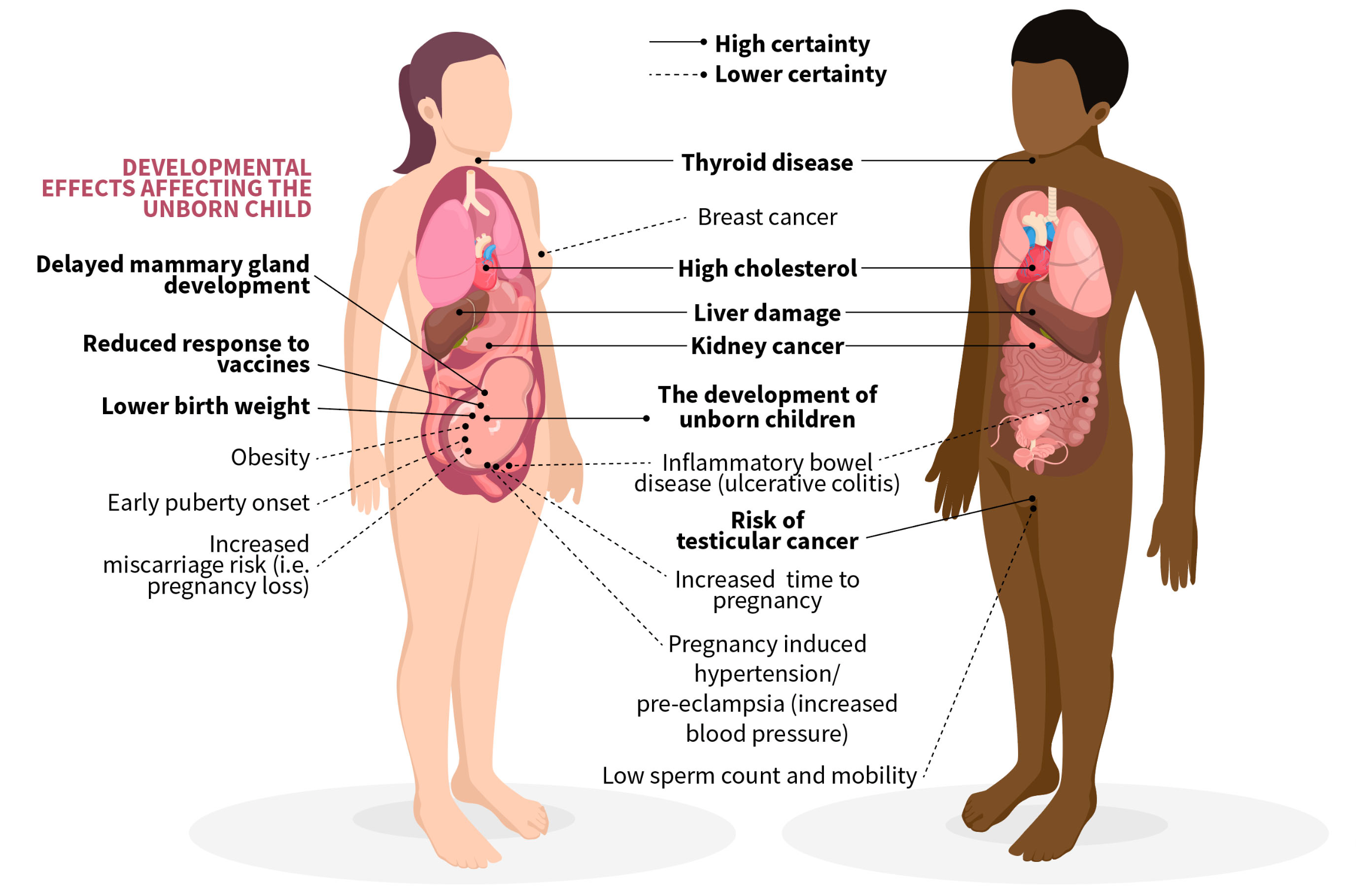
● There is an increasing amount of evidence linking PFAS exposure to harmful wildlife and human health impacts, including affecting the liver and immune system, and increasing risk of certain types of cancer.
● A wide range of UK wildlife have been found to be contaminated with PFAS, including: otters and hedgehogs, birds such as Northern gannets, buzzards and peregrines, dolphins, seals and porpoises.
● No river in England is in good chemical health. PFAS is widely present in UK rivers and drinking water, with potentially hazardous levels detected. At least 77% of English river sites where harmful PFAS forever chemicals have been found would fail proposed EU safety standards for surface water.
● PFOS levels in freshwater fish in England have been found to be on average 300 times higher than proposed new EU safe levels for aquatic biota.
● One specific PFAS (PFBA) is shown to bioaccumulate in seaweed at 6000 x the surrounding water.
It is important to learn lessons from Polychlorinated biphenyls (PCB) pollution - where the UK, and other countries, acted too late. This harmful chemical has had notable impacts on communities and nature globally. With marine predators from seals to sea eagles significantly affected due to accumulation up the food chain - with the UK’s orca population due to be extinct by the end of the century due to PCB fertility impacts.
We already have significant knowledge of the harm to people and wildlife that should make a PFAS precautionary approach, and universal restriction, essential.
11. Is there any regulatory divergence across the UK in terms of PFAS? If so, what are the implications, and is there a need for a more joined-up approach?
Northern Ireland remains under the protection of EU REACH and product regulation as part of the Windsor Framework, meaning a divergence in the internal UK market. Northern Ireland benefits from existing restrictions will benefit from the proposed EU REACH universal restriction brought on PFAS if and when this is successful.
All citizens in the UK should benefit from higher EU standards on PFAS and other hazardous chemicals, and avoid trade friction in the internal market. This could be secured by a swiss model alignment on chemicals during the EU reset process, followed by full chemical alignment after the conclusion of the reset process.
12. How do other jurisdictions around the world, including the EU and US, regulate PFAS use and disposal, and what lessons, if any, can the UK learn?
Large-scale restriction: The EU is taking a group-based, precautionary approach to PFAS through the proposed universal PFAS restriction. Sector-specific restrictions on their own are not enough but while the universal restriction goes through approval, Denmark and France, have both brought in bans in items such as clothing, shoes and food packaging. With a French tax on industrial emissions and a Danish Action plan for PFAS which includes commitments to remediation, monitoring, and development of alternatives.
Water and Food: PFAS can be filtered out of drinking water, but the cost is enormous and the water industry is not required to act until PFAS levels are deemed ‘high risk’. In August 2024, the Drinking Water Inspectorate set a new limit of 100 ng/L as “high risk” for the cumulative total of 48 different types of PFAS. However this is a voluntary standard. This compares to a more stringent legally binding limit of 100 ng/L for 20 PFAS in combination in the EU. And a legal limit of 4 ng/L of individual PFAS in the United States. Similarly for food-related contamination, the EU has legal thresholds for PFAS exposure and restrictions on PFAS in food packaging, which the UK does not. The Government should follow international best practice and implement legal requirements on PFAS limits for drinking water and PFAS exposure, and include restrictions on PFAS use in food packaging within a commitment to a universal PFAS restriction.
Sewage sludge: In the US a lack of regulatory action on PFAS in sewage sludge has led to legal action and individual state restrictions on application. The UK should urgently reassess its sewage sludge regulation and ensure that PFAS contamination is regulated, monitored and enforced.
Remediation: A polluter pays Extended Producer Responsibility approach towards producers and large-scale industry users of PFAS (and other hazardous chemicals) should be explored in the UK. Lessons can be learned from the Urban Waste Water Treatment Directive (UWWTD). The UWWTD is an EU regulation established in 1991 to protect the environment from pollution caused by urban wastewater and industrial discharges. While the original 1991 directive remains in force in the UK, a 2024 revision (not applied in the UK as a post-Brexit revision) introduces Extended Producer Responsibility (EPR), requiring pharmaceutical and cosmetic producers to cover 80% of the costs for removing micropollutants like PFAS from wastewater. It also strengthens monitoring and treatment requirements, enhancing environmental protections and climate resilience.
What lessons can the UK learn from other countries?
Please see section 12
Wildlife and Countryside Link (Link) is the largest nature coalition in England, bringing together 86 organisations to use their joint voice for the protection of the natural world and animals.
For questions or further information please contact:
Emma Adler, Director of Impact, Wildlife and Countryside Link
May 2025
[1] https://ec.europa.eu/docsroom/documents/49734
[2] Pesticide Action Network Europe, PFAS Pesticides report, November 2023
[3] 2023 Wildlife and Countryside Link and Rivers Trust analysis ‘Toxic chemical cocktails found at over 1,600 river and groundwater sites across England’: https://www.wcl.org.uk/toxic-chemical-cocktails-in-rivers-across-england.asp
[4] New James Hutton Institute Research: Re-Assessment of Environmental Risks from Sewage Sludge - Fidra
[5] Saliu & Sauvé, 2024 PFAS profiles in biosolids, composts, and chemical fertilizers intended for agricultural land application in Quebec (Canada) - ScienceDirect
[6] Cao et al. 2022; Wu et al. 2022 - see New James Hutton Institute Research: Re-Assessment of Environmental Risks from Sewage Sludge - Fidra
[7] https://www.theguardian.com/environment/2024/mar/12/sewage-us-crop-farming-lawsuit-pfas
[8] https://chemtrust.org/wp-content/uploads/PFAS-in-food-items_CHEM-Trust_PAN-UK_Fidra_2024.pdf
[9]https://assets.publishing.service.gov.uk/media/66ebe9a6c8398625c331e778/Annex_C_PFAS_WP4_Phase_4_-_Report_Rev0_REDACTED.pdf
[10] PFAS drinking water treatment trade-offs: comparing the health burden of GAC treatment to the health benefits of reduced PFAS exposure - Environmental Science: Processes & Impacts (RSC Publishing) DOI:10.1039/D5EM00238A
[11] https://environment.ec.europa.eu/system/files/2022-12/Impact_assessment_part2.pdf