Professor Michael Bohlander (SPA0025)
Submission of Written Evidence to the
House of Lords Select Committee on UK Engagement with Space
* * *
Supporting the Search for Extraterrestrial Intelligence (SETI) and the Research into Unidentified Anomalous Phenomena (UAP)
Author:
Dr Michael Bohlander, Chair in Global Law and SETI Policy, Durham University, Durham, UK
Supporting Contributors:
Dr Asli Abbasi, Independent Researcher in International Law, Tehran, Iran
Mr Philippe Ailleris, UFODATA Board Member, Amsterdam, The Netherlands
Dr Andreas Anton, Senior Research Fellow, Institute for Frontier Areas of Psychology and Mental Health (IGPP), Freiburg, Germany
Dr Michael C. Cifone Lecturer in Philosophy, St John’s University, and Founding Executive Director, Society for UAP Studies, New York, USA
Mr James Conway, Founder, UAP Files Media, UK
Dr Brenda Denzler, Independent Researcher, Pittsboro, North Carolina, USA
Dr Jörg Matthias Determann, Professor, Virginia Commonwealth University, Qatar
Mr Daniel Gerritzen, Independent Science Journalist and Writer, Hattingen, Germany
Dr Hakan Kayal, Head of the Professorship for Space Technology, Würzburg University, Würzburg, Germany
Dr Gerhard Kemp, Professor of Criminal Law, University of the West of England, Bristol, UK
Dr Jeffrey J. Kripal, J. Newton Rayzor Professor of Religion, Rice University, Houston, USA
Ms Helen McCaw, MA (Cantab), former economist and senior analyst in financial stability at the Bank of England, London, UK
Dr Eva-Maria Nag, Senior Executive Editor, Global Policy, Durham University, Durham, UK
Dr Christian Peters, Managing Director, Bremen International Graduate School of Social Sciences, Bremen, Germany
Mr Robert Powell, BS Chemistry, Executive Board Member, Scientific Coalition for UAP Studies (SCU), Austin, USA
Dr David Delgado Shorter, Professor, University of California Los Angeles, Los Angeles, USA
Mr. Frederik Uldall, MSc, Founder and Director, Danish Network for UAP Studies, Copenhagen, Denmark
Dr Beatriz Villaroel, Assistant Professor, Nordic Institute for Theoretical Physics, Stockholm, Sweden
(N.B.: The text of this submission is the sole responsibility of the author, and the usual disclaimer applies.)
About the author
Michael Bohlander has been the International Co-Investigating Judge in the Extraordinary Chambers in the Courts of Cambodia since 2015. From 2017 until 2022, he was also an international judge at the Kosovo Specialist Chambers. He joined Durham University in 2004 as a full professor, having previously been a life-tenured member of the German judiciary in criminal and civil cases since 1991.
He has published over 270 books, chapters, articles and book reviews on German law, English and Welsh criminal law, comparative and international criminal law, Islamic law, as well as SETI and law. His work has been translated into Chinese, Farsi, French, Khmer, Spanish and Turkish, and cited widely by and before national and international courts and authorities across multiple jurisdictions. He has spoken at numerous conferences, seminars and training events in the UK and abroad, including in Armenia, Cambodia, Canada, China, Croatia, Egypt, Georgia, Germany, Iran, Iraq/Kurdistan, Italy, Japan, Kazakhstan, Kosovo, Kuwait, Lebanon, the Netherlands, Singapore, Spain, Sweden, Turkey, the United Arab Emirates, the United States (including the Military Academy at West Point), Tanzania (at the former International Criminal Tribunal for Rwanda in Arusha) and Tunisia.
From 2010 until 2014, he held the Visiting Chair in Criminal Law at the Rijksuniversiteit Groningen in the Netherlands. In 2012, he was the first non-Muslim visiting scholar ever to teach at the Faculty of Law of Al-Azhar University in Cairo. He helped train the judges of the Iraqi High Tribunal which tried Saddam Hussein.
Since 2020, his main research focus has been on the consequences of a potential contact with extraterrestrial intelligence for human law and society in the wider sense. In 2023, his monograph “Contact with Extraterrestrial Intelligence and Human Law – The applicability of rules of war and human rights” was published[*]. He is a member of the Advisory Board of the Society for UAP Studies, and on the Editorial Board of “Limina – The Journal of UAP Studies”. Further references to SETI- and UAP-related work can be found on his staff page at Durham Law School.
* * *
The contributors listed above have provided commentary on previous drafts and/or endorsed this submission. Their support is gratefully acknowledged.
The author writes in a purely personal capacity as far as his judicial role is concerned.
Background
Engagement with space, especially with outer space, raises the question of how to deal with the possibility of encountering intelligent extraterrestrial life (ETI), not least since research in recent years has already found over 5,000 exoplanets in the cosmic vicinity of Earth, with more to be expected the further out the search will spread. The statistical chance that some of them may have developed habitable conditions conducive to the emergence of intelligent life is thus increasing with time.
The question of contact with ETI is often described as a low-probability, high-risk scenario for mankind:
“It is statistically unlikely that humans are the only intelligent species in the universe. Nothing about the others will be known until contact is made beyond a radio signal from space that merely tells us they existed when it was sent. That contact may occur tomorrow, in a hundred years, or never. If it does it will be a high-risk scenario for humanity. It may be peaceful or hostile. Relying on alien altruism and benign intentions is wishful thinking. We need to begin identifying as a planetary species, and develop a global consensus on how to respond in either scenario.”[1]
Since the second half of the 20th century, the traditional search for extraterrestrial intelligence (SETI) has been looking into outer space for signs of other intelligent life, in more recent years in the form of the search for so-called “bio-“ or “technosignatures”, i.e., evidence in the atmosphere of an exoplanet that points to the existence of advanced life or a (post-)industrial civilisation, or even of megastructures capable of harnessing the entire energy of stars (so-called “Dyson Spheres”)[2].
No signal of any kind has so far been verified to the necessary rigorous standards, despite intriguing instances such as the so-called “Wow! Signal”.[3] The same applies to bio- or technosignatures, although that aspect of SETI is still relatively new[4].
However, for decades or even centuries[5], humans have reported encounters of varying proximity with unknown phenomena, craft (Unidentified Anomalous Phenomena – UAP; previously often called UFOs), or even what seem to be biological entities on Earth. These reports are ongoing across the globe, including the UK[6], and have included sightings by highly trained military and civilian pilots[7] and other personnel, supported by instrumental data.
A large number of cases remain unsolved as to whether these phenomena were or are of non-human origin, unexplained natural or psychological events, or simply secret human technology. This applies, for example, to the UK’s most famous sightings: The 1980 Rendlesham Forest incident[8] and the Calvine[9] UFO[10].
Debates about a non-human intelligence (NHI) origin of UAP have mainly focussed on the extraterrestrial hypothesis (ETH) and the interdimensional hypothesis (IDH). Suffice it to say, neither has been conclusively verified or falsified.
In addition to the mere supposed sightings of ultimately mechanical objects, the UAP debate – as opposed to SETI – comprises numerous accounts of so-called “high strangeness” experiences, from alleged abductions[11] to other possibly psychic or paranormal experiences[12], which defy easy classification under evidence-based natural or social science methodology.
Especially the ETH has faced criticism due to the distances related to interstellar travel and the propulsion technology necessary to overcome them[13].
Unsurprisingly then, both SETI and UAP research, the latter more so than the former, still retain a connotation as essentially being pseudo-science in wide circles of traditional scientists.
Receiving an astronomical signal from afar travelling at light speed would equally not necessarily mean that a proper two-way conversation could be had within a human lifetime, given the vast interstellar distances between star systems or galaxies. Any civilisation that sent it may also long since have become extinct, depending on the distance of the signal source from Earth.
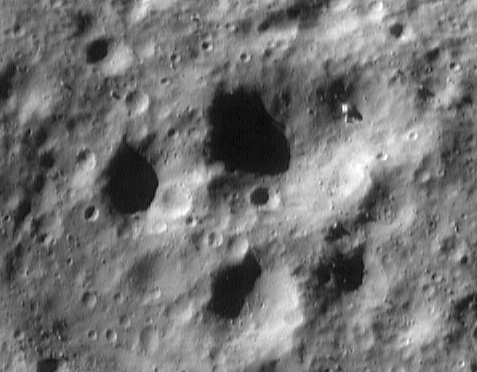
Nonetheless, both astronomical SETI and UAP research have produced image-based material about anomalies that have so far remained controversial or have not been satisfactorily explained, for example:
Image 12.1. shows the anomaly on Asteroid 433 Eros, taken by the NASA NEAR Shoemaker probe on 1 May 2000.[14]
Image 12.1.

Image 12.2. shows a photograph of an apparently disc-shaped object taken automatically by a plane camera on a surveying mission in Costa Rica in 1971[15].
Image 12.2.

Finally, image 12.3. is the famous Calvine UFO photo from 1990[16]:
Image 12.3.

The need for action
The UK Government should engage pro-actively with both SETI and UAP research, both as far as disclosure of previous occurrences and future investigation are concerned.
The process should also as far as possible be conducted openly and transparently, avoiding the ubiquitous invocation of national security concerns. The question of the presence of NHI on or near Earth or in outer space is by definition not a “national” matter, but one for all of humanity.
While the carefully administered public admission and disclosure of evidence of any NHI presence on Earth or in space with vastly superior technological capabilities by the governments of the world could in and of itself raise existential issues of human sovereignty, both on a governmental level[17] and as a planetary species, the risk arising from an uncontrolled so-called “catastrophic disclosure”[18] – for example, the scenario of an alien craft landing or crashing in a public environment with instant global social media coverage – might be even greater, resulting in what has been called an “ontological shock”[19] on a global level.
This could also cause massive concerns and problems from the point of view of risk and disaster management, including matters such as financial stability.
The UK Government should therefore do its utmost, if it is in possession of relevant evidence, to remove the debate from the realms of conspiracy theories and disinformation campaigns, the black box of official secrets, and so-called whistleblowers who, as far as the US experience over decades has shown, are almost inevitably restricted in public to presenting hearsay narratives without being permitted to provide the supporting hard evidence.
As explained in a letter to the Guardian of 14 February 2025[20]:
“Much as in the US, with the recent congressional hearings on unidentified anomalous phenomena, the UK government is apparently less than transparent in its handling of UAP sightings […]. And, as in the US, any hope for imminent and trustworthy disclosure about what these objects may be is probably futile.
Those who do not a priori consider this topic ludicrous, or exploit it in a sensationalist manner, are increasingly taking a more nuanced and independent approach. If there are such phenomena, it stands to reason that they can and should be studied with the necessary rigour.
The unspoken implication is that at least a small proportion of these sightings may relate to what is called NHI – non-human intelligence. If that were to turn out to be true, the consequences for our worldview as the human species would make the Copernican revolution pale into insignificance. Serious research is more than warranted. […]
It has taken astronomical research into SETI (Search for Extraterrestrial Intelligence) many decades to lose its stigma as pseudo-science and a reputation-wrecking endeavour. The same needs to happen for UAP research.”
Attempts at engaging the UK Government in particular have already happened: The US-based SOL Foundation[21], for example, published a White Paper in 2024, entitled “Unidentified Anomalous Phenomena: Policy Implications for the Government of the United Kingdom”, drafted by its UK member Helen McCaw[22].
The UK, as a member of the so-called Five Eyes (FVEY) joint intelligence group (with the USA, Canada, Australia and New Zealand), is already part of the “FVEY UAP Caucus”, which had its inaugural meeting with the US All-Domain Anomaly Resolution Office (AARO)[23] on 23 May 2023[24], the purpose of which was described as follows:
“This inaugural FVEY UAP Caucus brings together key partners to cultivate shared awareness of allies' UAP issues; detection, identification, and mitigation activities and challenges; and opportunities for mission-specific collaboration. Planned presentations include our own office updates on operations and analyses and updates from FVEY partners. The intent is to develop a framework for future UAP collaboration.”[25]
In the UK, organisations such as the UK SETI Research Network (UKSRN)[26] and the British UFO Research Association (BUFORA)[27] have been working for some time on collecting evidence and/or enhancing rigorous debate on the issues. The former recently established the “SETI Post-Detection Hub” at St. Andrews University[28].
Durham University, for example, has hosted several major events since 2022 on both SETI and UAP topics[29] and carried out a global survey in 2024 on people’s attitudes to diverse contact scenarios.[30] At its forthcoming symposium on 24 April 2025[31], the “Durham Declaration on SETI and UAP Research” will be announced and opened for public endorsement.
However, the engagement does not end with the question of whether we will ever find evidence of extraterrestrial NHI, and what our efforts should be. Contact of any kind, but especially direct contact, triggers a multitude of regulatory questions:
What is the process of communicating the scientific discovery of a signal from space? Who tells the world? Shall humanity respond, and who decides the content of the response?
Is it permissible to send messages into space in order to elicit a response from an ETI (METI), when the self-professed aim of that exercise is to bring about a situation humanity may not be able to control?
How would we proceed if a non-human artefact was found – including potential intellectual property issues regarding exploitation of discovered technology?
If contact were to be hostile, what are humanity’s capabilities and rules regarding conducting warfare against ETI – if it was at all possible due to the possible power imbalance?
If contact were to be benign, what would be the human baseline for any negotiations with the NHI/ETI?[32]
So far, there are no legally binding rules for any of these questions. They may seem of remote interest given the current geopolitical situation, but as was said above, they can become relevant at any time and then with urgency. Precaution would mandate adequate preparation for such an existential event.
Any and all of the above-mentioned endeavours need to be properly funded.
In the US, for example, this has so far happened mainly in the field of SETI through grants for traditional astronomical research, or through major donations from private donors. Public funding for UAP research has been conspicuous by its absence.
However, recent scientific projects in the EU related to UAP, such as, for example, the VASCO project conducted by Beatriz Villaroel in Sweden[33], and the deployment of cameras to Mars in order to search for UAP organised by Hakan Kayal through the Interdisciplinary Research Centre for Extraterrestrial Studies (IFEX) at Würzburg University[34] in Germany, have seen the emergence of targeted public funding. IFEX, in coordination with the German Federal Aviation Office (Luftfahrtbundesamt), has also arranged a public online portal for pilots to report UAP sightings, which is about to go live soon. Similar initiatives should also be considered and supported in the UK.
Instrument-based scientific research is only one side of the coin. Serious consideration and support also needs to be given to supporting research into alien encounter narratives based on non-repeatable personal experiences[35], as well as their medical and psychological consequences[36] arising from ontological shock. All too often these are written off as figments of an overactive imagination, mental health issues, or as downright hoaxes – albeit admittedly in many cases rightly so.
Yet, there remains a significant number of residual cases that do not fit into any of the traditional human classification categories.
Conclusion
To sum up, the risk of encountering a possibly extraterrestrial NHI presence on Earth or in space is a matter that warrants urgent, sustained, and rigorous interdisciplinary research.
The UK should take the lead in providing an enabling environment which includes funding streams for independent research.
14 April 2025