Written evidence from The National Secular Society [CCI0048]
Introduction
The National Secular Society is a not-for-profit civil society organisation founded in 1866, funded by its members and by donations. We advocate for separation of religion and state and promote secularism as the best means of creating a society in which people of all religions and none can live together fairly and cohesively. We seek a diverse society where all are free to practise their faith, change it, or to have no faith at all. We uphold the universality of individual human rights, which should never be overridden on the grounds of religion, tradition, or culture.
Secularism is a political idea concerned with the best way to govern religiously pluralist societies. The right to freedom of religion or belief, which includes the right to be free of religion, should be fundamental to efforts to promote social cohesion. We believe that the model of secularism we advocate for, which defends the civil liberties of all, is the best foundation on which to promote community cohesion. This model is encapsulated in three principles:
Key recommendations
1.1. We recommend the committee consider the 2024 independent review into social cohesion and resilience by Sara Khan in close detail. In the review, Khan criticised the lack of a national strategic approach to social cohesion, and called for a "new approach" to social policy, including the creation of a cross-government "Cohesion Response Unit"[1]. Khan’s review included a particular focus on the case of the Batley Grammar School teacher who was forced into hiding in 2021 following accusations of ‘blasphemy’. Our response to Q2 will set out the risk of ‘blasphemy flashpoint’ incidents of this kind to community cohesion, and how the response of authorities to previous incidents exemplifies the inadequacies of current thinking and approaches to cohesion.
1.2. Additionally, in 2023, the Department for Levelling Up, Housing and Communities (DLHUC) published an analysis of the call for evidence relating to Khan’s review of social cohesion and resilience[2].
1.3. This analysis found that respondents to the call for evidence cited the following factors as most important in determining social cohesion:
#1 Lack of racial or religious discrimination (96% of respondents)
#2 People from different backgrounds getting on well (93% of respondents)
#3 Trust in democratic institutions (93% of respondents)
#4 Public rejection of divisive extremist actors within communities (93% of respondents)
1.4. As set out below, the structure and policies of the British state promote racial and religious discrimination, undermine trust in democratic institutions, and frequently assist divisive extremist actors within communities. They also fail to actively promote people from different backgrounds getting on well.
1.5. The changing demographics of the UK should be considered as part of initiatives to promote community cohesion. The 2021 Census revealed Christians are now a minority in England and Wales, with 46% of people describing themselves as “Christian” - a 13 percentage point decrease from 2011. The percentage of people who have no religion increased significantly to 37%[3]. In 2011, this figure was 25%. The nonreligious are now also the largest group in Wales.
1.6. In Scotland, the majority of the population are now nonreligious. Results from the 2022 Scottish Census, found that 51.1% of people in Scotland have no religion. In 2011 the figure was 36.7%[4].
1.7. In Northern Ireland, those without a stated religion are the second largest group, according to its Census results published in 2022[5].
1.8. The most recent census results also revealed members of minority religions including Islam and Hinduism are steadily increasing throughout the UK.
1.9. These trends are very likely set to continue. A long-term, sustainable settlement on the relationship between religion and the state is required. As the UK becomes more irreligious and religiously diverse, the need for a state that reflects the reality of our irreligious and diverse people and is fit for the 21st century will become ever more pressing. Fundamental reforms to disentangle the Church of England from our constitution, and to create a framework for a secular state where citizens are treated equally, no matter their religion or belief, are therefore much needed.
2.1. Religious extremism and freedom of speech
2.1.1. Religious extremism is one of the principal threats to community cohesion is the UK. Extremists of all kinds seek to seed division and hostility between communities which can ultimately lead to violence and unrest. Extremism can also lead to the oppression of people or minorities within religious communities, including women, LGBT people, and those who are perceived to dissent from religious orthodoxy or doctrine.
2.1.2. The NSS believes everyone must have the right to hold whatever beliefs they wish – including extremist beliefs – and the right to express those beliefs, provided they do not directly incite crime. However, religious extremism must be challenged, not pandered to or inadvertently lent support.
2.1.3. Free expression, scrutiny, and inquiry are essential to challenging extremism. All efforts to promote community cohesion must ensure they do not restrict or stifle these fundamental rights, and thereby inadvertently aid the cause of extremists who seek to divide our society.
2.1.4. With this in mind, we are particularly concerned by increasing attempts to categorise offending religious sensibilities as 'hate speech', making criticism, mockery or perceived 'insult' of religion a criminal act akin to racial hatred or inciting violence. Specifically, we are concerned by the potential introduction of the All Party Parliamentary Group on British Muslims’ definition of ‘Islamophobia’, which conflates hatred of, and discrimination against, Muslims with criticism of Islam. The Islamophobia Defined report published by the APPG itself accuses those who brought forward concerns about freedom of speech as being motivated by anti-Muslim sentiment[6].
2.1.5. The report’s core point is that local authorities should make it policy to define Islamophobia as “a type of racism that targets expressions of Muslimness or perceived Muslimness”. Islam is not a race or ethnicity; it is a set of ideas and beliefs which, like any set of ideas and beliefs, must be open to criticism. “Expressions of Muslimness” can effectively be translated to mean Islamic practices. In a society which is free and democratic, such practices must remain open to scrutiny and debate. We are concerned that allegations of Islamophobia will be, indeed already are, used to effectively shield Islam and even extremists from criticism, and that formalising this definition will result in it being employed effectively as something of a backdoor blasphemy law.
2.1.6. Sara Khan has also raised concerns over the report, claiming its “narrow understanding of ‘Muslimness’ leaves behind those Muslims who, because of how they choose to live their lives or practise their religion, don’t have a “Muslimness” that other Muslims find acceptable”[7]. One such example is the Ahmadi Muslim community, who are frequently denounced by other Islamic sects as blasphemous. Such attitudes led to the murder of Ahmadi Muslim Asad Shah in Glasgow in 2016 by a Sunni Muslim. The Islamophobia definition will not defend Ahmadi Muslims or other minority Muslim groups from sectarianism, and may in fact impede efforts to protect these communities by chilling free speech.
2.1.7. Other examples include LGBT Muslims, women and those who choose to leave the religion of Islam. LGBT rights campaigners have been called 'Islamophobes' for criticising the views of Muslim clerics on homosexuality. Meanwhile, ex-Muslims and feminist activists have been called 'Islamophobes' for criticising certain Islamic views and practices relating to women[8]. Even liberal and secular Muslims have been branded 'Islamophobes'. Far from combatting prejudice and bigotry, erroneous claims of 'Islamophobia' have become a cover for it, by silencing these groups’ and individuals’ criticism of Islamic teachings that contribute to their oppression.
2.1.8. While the APPG authors made assurances that it does not wish to infringe free speech, the content of the report, the definition itself, and early signs of how it would be used, suggest that it certainly would. As set out in a 2024 report by Policy Exchange, co-authored by former MP Khalid Mahmood, accusations of ‘Islamophobia’ are already being used to suppress entirely legitimate speech[9].
2.1.9. Example cases include that of Shaima Dalalli, who was dismissed from her role as president of the National Union of Students in 2022 after an investigation into allegations of antisemitism against her[10]. The Muslim Council of Britain attacked Dalalli's dismissal as Islamophobic, with the Federation of Student Islamic Societies also describing the investigation as "institutional Islamophobia". As antisemitism is dangerously toxic to community cohesion and society, an inability to challenge it due to fears one will be accused of ‘Islamophobia’ should be treated as a cause for alarm by the committee.
2.1.10. The report also raises concerns that the definition of Islamophobia formulated by the All Party Parliamentary Group on British Muslims - which states that accusing Muslims of exaggerating Islamophobia is itself Islamophobic – portrays those challenging misinformation as racist and bigoted. The report highlights the "significant falsehoods or exaggerations" of initiatives such as Islamophobia Awareness Month, which is run by the Islamist organisation MEND, and backed by the Muslim Council of Britain. This included claims that the level of hate crime offences targeting Muslims was more than twenty times higher than it in fact was[11][12], as well as unsupported claims that of those stopped under stop and search powers at airports or ports, 90% were Muslim[13]. The claims have since been deleted.
2.1.11. Accusations of Islamophobia are closely linked to accusations of ‘blasphemy’. In November, a question concerning Islamophobia Awareness Month from Labour MP for Birmingham Hall Green and Moseley Tahir Ali asked the Prime Minister to "commit to introducing measures to prohibit the desecration of all religious texts and the prophets of the Abrahamic religions"[14]. The question portrays the protection for religious beliefs themselves as necessary for the protection of individuals – a mistake inherent to the concept of ‘Islamophobia’, and made explicit by the APPG definition.
2.1.12. Whilst we recognise anti-Muslim bigotry is a pressing societal problem which harms a significant number of people in the UK, and contributes to wider erosion of community cohesion, tolerance and trust, existing law already protects individuals from harassment and discrimination on the basis of religion or belief. We therefore urge the committee to closely scrutinise any claims that the use and further definition of ‘Islamophobia’ is necessary in order to challenge bigotry and promote cohesion. Instead of ‘Islamophobia’, we recommend the committee employ the term ‘anti-Muslim bigotry’, which far more clearly distinguishes between legitimate criticism of religion and attacks upon individuals.
2.1.13. Whilst efforts to challenge hatred, discrimination, and bigotry are vital, they must not come at the expense of freedom of expression. Instead, freedom of speech must be seen as fundamental to challenging intolerance and promoting cohesion.
2.1.14. To effectively tackle religious intolerance, the government should adopt a universal approach that aligns with established principles of anti-discrimination, equality, and human rights, including freedom of expression. Instead of adopting various ‘religion-phobia’ definitions, the focus should be on promoting understanding of, and respect for, the principle of freedom of religion or belief, ensuring that responses to intolerance are consistent and grounded in a robust human rights framework.
2.2. ‘Blasphemy’ incidents
2.2.1. In recent years, a number of events involving accusations of ‘blasphemy’ have significantly damaged community cohesion. The response to these incidents from authorities has often been poor, and indeed has often involved appeasing extremists, to the detriment of freedom of expression and ultimately community cohesion. We believe these failings to be a result of a mistaken interpretation of community cohesion.
2.2.2. One of the most significant of these events was the case of Batley Grammar School (BGS) where in March 2021, a religious studies teacher was forced into hiding following accusations of 'blasphemy' for showing a picture of Muhammad to a class. Following a single phone call from a parent raising concerns about the use of the image, BGS decided to issue an apology to the parents of every pupil. The apology provided no context or explanation for the lesson's content, and leaders did not consult the religious studies teacher before sending it. Senior school leaders denounced the use of the image at a televised press conference, and met several self-appointed 'community leaders' - none of whom were parents. They also suspended the teacher, isolating him by preventing communication with his colleagues. Pupils were subsequently forced out of school as angry protesters gathered at the gates demanding action against the teacher for 'offending' "the whole Muslim community". Some protesters accused the teacher of stirring up hatred against Muslims.
2.2.3. According to the Khan review, the response of the school, police, and political authorities exposed a severe lack of understanding of the seriousness of blasphemy accusations, and served to validate and encourage the demands of religious activists promoting division. Constituency MP at the time Tracy Brabin also issued a statement describing protestors' "upset and offence" as "understandable" and "predictable". Her criticism of the threats and intimidation directed towards the teacher, made some days after her first statement, was tempered by a simultaneous welcome of the school's apology and "recognition of the offence caused".
2.2.4. Kirklees Council, which issued no public statement of any kind during the protests, told the review they took this decision to maintain their relationship with the local Muslim community – a prime example of misguided approaches to cohesion which treat Muslims as a homogenous group. As the Khan review makes clear, many Muslim parents at Batley did not support the protests.
2.2.5. Exhibiting a similar mindset, an officer from West Yorkshire Police described to the review how police inadvertently support extremist preachers in the misguided belief that they have a positive relationship with a minority community. Experienced police officers also criticised the failure to make clear that any threatening, harassing or intimidatory behaviour against the teacher and other school staff would not be tolerated, and that perpetrators would be subject to the full force of the law.
2.2.6. Another blasphemy flashpoint incident occurred in 2023, when four pupils were suspended from Kettlethorpe High School in Wakefield after a pupil brought a Quran into school, where it was allegedly scuffed[15]. The pupils subsequently received death threats[16].
2.2.7. As with Batley, so-called community leaders exacerbated tension and divisions, leading to representatives from the school, West Yorkshire Police, and the boy's mother appearing at a local mosque alongside religious leaders in an attempt to prevent unrest. One local councillor, Usman Ali, described the incident on social media as "serious provocative action which needs to be dealt with urgently by all the authorities," including the police. As with Batley, every effort was made to accommodate and appease religious leaders and activists, with very little made to challenge them. Every indication is that the authorities viewed the damaging of the Quran itself as undermining social cohesion, not the actions and rhetoric of religious activists.
2.2.8. Numerous other attempts to imposed religious belief on society have been made in recent years. In 2022, Cineworld cancelled all screenings of a film about Islamic history for security reasons following religious protests[17]. The film was accused of being ‘blasphemous’ and ‘Islamophobic’[18]. In 2019, several nonreligious primary schools in Birmingham faced protests and threats from religious activists over LGBT-inclusive education[19]. At the time, Sara Khan said there was “evidence people travelled from other parts of the country, including South Wales, to exploit the situation” at one of the schools. And in 2018, St Stephen's Primary School in east London was subjected to abusive and threatening messages to its staff and trustees, after the school asked parents not to make young children wear hijab or fast for Ramadan. The school was forced to reverse its policies, and leaders expressed frustration at the DfE's failure to support them[20].
2.2.9. The cases of Batley, Kettlethorpe, and others, demonstrate the success of religious activists in convincing public bodies that they represent the wider Muslim community, and how the privileging of religious sentiments throughout public life makes it more difficult to challenge extremism that threatens social cohesion.
2.2.10. Perceived religious or ‘community’ leaders, who are often largely self-appointed, tend to adhere to more orthodox or conservative interpretations of religious doctrine than the communities they purport to represent. Diversity of thought and belief exists throughout every religious community, and it is essential that this diversity is not erased by treating communities as homogenous. With regards to engagement with British Muslims, it has also often been the case that those claiming to act as community leaders or representatives have been the most active in levelling accusations of ‘Islamophobia’, and indeed may have themselves been responsible for stoking divisions between communities.
2.2.11. As set out here, blasphemy flashpoint incidents, together with other attempts to impose religion on our society, have been deeply damaging for community cohesion. A failure to adequately deal with threat of such incidents will open the door to their exploitation by far-right extremists seeking to exacerbate divisions in society. Furthermore, the threat of anti-blasphemy extremism is very likely to increase. As highlighted by the Commission for Countering Extremism in 2023, 'anti-blasphemy activism' in the UK is becoming "increasingly radicalised", with responses to perceived acts of 'blasphemy' "more organised than ever"[21]. Similarly, a 2023 review of the government's counterextremism Prevent programme highlighted the "violence associated with accusations of blasphemy and apostasy" as an area of particular importance in challenging extremism[22].
2.2.12. Although the above high-profile 'blasphemy' incidents related to Islam, evidence suggests other religious groups are also calling for restrictions on free speech around their religion. In the run up to last year's general election, a 'Hindu manifesto' called for 'Hinduphobia' to be criminalised. Examples of Hinduphobia given in the manifesto include saying that "all inequity in Indian society", such as "caste" and "misogyny" are connected to Hinduism[23]. The Hindu Council UK, which backed the manifesto, threatened Leicester Secular Society last year with police action for holding an event critical of Hinduism's caste system[24]. And this year, several cinemas cancelled screenings of the film 'Emergency' following disruptive and intimidating protests from pro-Khalistan Sikh activists[25] objecting to the depiction of Sikh figures. Appeasing religious demands for censorship, rather than upholding freedom of expression, merely fuels ever more extreme demands from increasing numbers of groups, which in term fosters sectarianism and erodes community cohesion.
2.2.13. It is therefore vital that any strategy for promoting community cohesion places central importance on challenging anti-blasphemy extremism. To this end, such a strategy must reject the efforts of extremists to conflate criticism of religious ideology with attacks upon individuals. This includes abandoning the conceptual framework of ‘Islamophobia’, and insisting on the protection of fundamental civil liberties such as freedom of expression.
2.3. Religious privilege and community cohesion
2.3.1. As a precursor to cohesion, citizens need to feel that they belong to and are valued by the society in which they live. With this in mind, the continued religious privilege at the heart of our constitution and society should be treated as a primary barrier to community cohesion. The special status afforded to the Church of England as the established Church, and the various other privileges which flow from this status, is perhaps the clearest and most powerful symbol of religious privilege in our society. Its existence as a legally-enshrined national religion puts one part of the population, one institution and one set of beliefs ahead of all others. Its status signals to those who are non-Christian, and non-Anglican, that they are of less importance and less worth. This fundamentally undermines the principle of equal citizenship and alienates many from British society, impeding a shared sense of belonging.
2.3.2. Furthermore, when one religion is afforded special privileges by the state, other religious groups will, understandably, demand similar privileges for themselves, creating more potential for division and bitterness between those religions 'favoured' by the state, and those which are not.
2.3.3. For example, the UK is unique among western democracies for automatically giving seats to religious clerics in its legislature. Twenty-six Church of England bishops sit in the House of Lords as 'lords spiritual' as of right. This has prompted calls from some to include representatives from other religious groups on these benches. Prior to revision, an amendment to the Hereditary Peers' Bill by Lord Blencathra included a seat for a representative of the Muslim Council of Britain - a highly controversial group due to its officials' favourable remarks about extremists[26]. Similarly, there have been calls to make the Anglican prayers which open sittings in both Houses of Parliament 'multifaith' in nature. This month, a council in Oklahoma, USA, voted to abolish its prayers entirely after its 'multifaith' approach caused division between people of different religions and beliefs[27].
2.3.4. We believe the solution is to remove the Church of England's privileges, rather than extend them to other groups. No other UK legislatures give automatic seats to religious leaders, while the assemblies of Northern Ireland and Wales do not open with prayers. The UK Parliament should similarly adopt more secular, inclusive reforms.
4.1. Reform charity law
4.1.1. Reforming charity law to prevent the promotion of extremism should be treated as a priority for improving community cohesion. Whilst much of the work of religious charities, such as helping the poor, is secular in nature and beneficial to society, there are religious organisations which exploit the privileged status of religion in charity law to conduct activities that do not fulfil a genuine public benefit, and only serve to further religious ideology. In the worst cases, religious charities may harm society and individuals.
4.1.2. Registered charities must serve a purpose recognised as "charitable". Charity laws specify a list of "charitable purposes," one of which is "the advancement of religion".
4.1.3. Charities must also demonstrate that they provide a genuine public benefit. But guidelines are vague on what constitutes a public benefit, particular in relation to religious activities. There is still an assumption in the charity system that religion is inherently beneficial. This view is not supported by evidence[28].
4.1.4. The NSS has consistently observed registered religious charities promoting extremism of all kinds:
- Violent extremism: In 2023, we referred Islamic Centre Leicester to the Charity Commission after seeing a sermon recorded at the centre which suggested 'blasphemers' should be executed[29]. And in 2021, we referred Miftahul Jannah Academy and Masjid-E-Umer Trust to the commission for hosting a lecturer who praised the Taliban and encouraged Muslims to fund jihadists[30].
- Antisemitism: In 2023, we notified the Charity Commission for England and Wales regarding 44 Islamic charities which published antisemitic and/or extremist lectures, social media posts or other content following the October 7th Hamas attack on Israel[31].
- Sectarian hate: In 2019, we raised concerns that religious charity Khatme Nubuwwat Centrem also known as Stockwell Mosque, which displayed literature calling for the killing of Ahmadi Muslims, had obtained and retained registered charity status[32].
- Misogyny and violence against women: We have referred more than a dozen religious charities to the regulators for promoting, signposting or condoning misogyny. Several have condoned marital rape; one charity, An-Noor Masjid and Community Centre, hosted a lecture in 2024 which said a man may hit his wife if she refuses to have sex with him[33].
- Homophobia: We have also referred several charities to the regulators for promoting hate of LGBT people[34] and 'gay conversion therapy'[35].
4.1.5. Links between religious charities and anti-blasphemy extremism have also been highlighted by the Commission for Countering Extremism, as exemplified by the case of Purpose of Life charity[36]. The charity was issued a warning by the Charity Commission in 2021 after it publicly named the teacher at the centre of the Batley school incident in an open letter "written in such a way as to be likely to inflame existing tensions within the local community".
4.1.6. The NSS has also challenged other charities undermining social cohesion. In 2023, the government ended its funding agreement with Christian charity Zion Projects after the NSS raised concerns about comments from the charity’s chair describing Islam as "demonic".
4.1.7. Our recommendations concerning education and schools can be found in our response to Q6.
4.2. Secular public services
4.2.1. We are concerned that the government's drive to include more religious groups in the delivery of public services may threaten community cohesion if safeguards are not put in place.
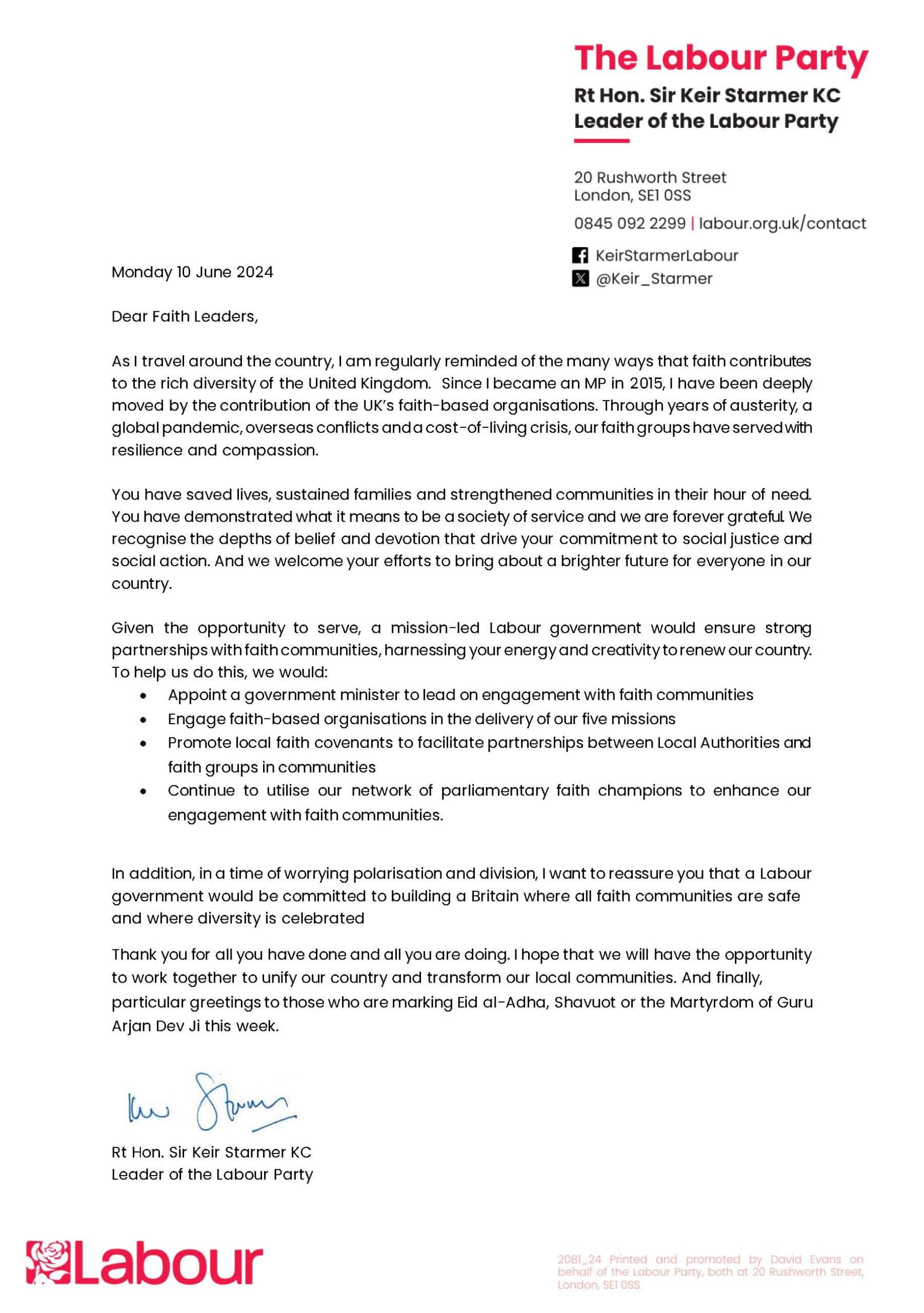
4.2.2. In the run up to the general election, Keir Starmer said in a letter addressed to "Faith Leaders" that his government would "ensure strong partnerships with faith communities"[37]. Similar sentiments were expressed in the Labour Party manifesto[38].
4.2.3. These promises to faith leaders run counter to secularist principles and threaten to undermine the inclusivity of public services and policies. Local authority services that we all pay for should be equally welcoming to people from all religion and belief backgrounds.
4.2.4. Where religious organisations join others in delivering public services, they should be expected to refrain from proselytising or discriminating against service users or their employees. But we are aware that many organisations contracted to deliver public services have used this as an opportunity to proselytise, often to vulnerable beneficiaries. Examples include Azalea[39], which has also faced recent criticism over religious views expressed by its CEO[40], and All Souls Serve the City, which was a recipient of the previous government's controversial 'faith new deal' pilot fund[41]. Both organisations will only hire Christians for frontline roles.
4.2.5. Some religious groups funded with public money have also expressed divisive and extremist views. For example, in 2023 the previous government had to pause its £2.2m “Youth Investment Fund” to Green Lane Masjid and Community Centre after we raised concerns about the charity’s history of misogyny, homophobia and antisemitism[42]. In the same year, the government also terminated its 'faith new deal' pilot fund of £43,220 to Zion Projects after we found sermons by the charity's chair calling Islam "demonic" and "a very strong force of spiritual wickedness"[43].
4.2.6. We therefore urge the government to ensure all public services contracted to third parties are delivered in a secular manner, without proselytising, by organisations committed to equality and social cohesion.
5.1. Integrated education in Northern Ireland
5.1.1. We believe integrated education in Northern Ireland is a positive initiative to promote community cohesion. Integrated schools proactively teach pupils from Protestant, Catholic and other religious and nonreligious backgrounds together, in an effort to end religious sectarianism and segregation in NI.
5.1.2. Surveys consistently demonstrate widespread and growing public support in NI for integrated schools and educating children from different backgrounds together. The Northern Ireland Good Relations Indicators 2021 Report found 83% of nonreligious people, 69% of Protestants, and 57% of Catholics said they would prefer to send their children to a school of mixed religions[44]. A separate survey by LucidTalk published in 2021 found 71% of respondents said integrated education should be the ‘main model’ for NI’s education system[45].
5.1.3. The implications of increased integrated education for pupil outcomes and society are universally positive. One of the greatest benefits is the ability of integrated schools to bring together children from different communities in a long-term and meaningful manner, thereby healing societal division. Another is their inclusion of children of all religions and beliefs, including those from nonreligious and non-Christian backgrounds. This upholds the principal of equality for all children and fosters greater community cohesion. We believe the principles underpinning integrated education can serve as a good model for the rest of the UK.
5.1.4. We know many schools without a religious character throughout the UK, especially in diverse areas, are highly successful in promoting community cohesion. They ensure they are equally welcoming to families of all religions and beliefs, and teach about the importance of equality of all people whatever their race, sex, sexual orientation, or other protected characteristics. We recommend the committee examine such schools as models for community cohesion.
6.1. One of the best means available to promote social cohesion is to educate children of different backgrounds together. Yet as it stands, our education system divides children on the basis of their parents’ religion in order to educate them separately. Around a third of English and Welsh schools are faith schools, while Scottish and Northern Irish schools are still divided on sectarian lines. Faith schools build division into the system. A secular approach to education would ensure all publicly funded schools are inclusive and equally welcoming to all children and their families, no matter what their religion or belief. This would make a substantial positive contribution to social cohesion.
6.2. School Admissions
6.2.1. Separating children according to religion is divisive and undermines social cohesion. It wrongly signals to the public, and perhaps even more damagingly to pupils, that people of different faiths do not belong together.
6.2.2. Religious discrimination is facilitated in school admissions by exemptions from equality law allowing them to discriminate against prospective pupils whose families do not share the religion of the school, and in some circumstances against potential and current employees on the basis of religion.
6.2.3. Religiously selective admissions have been shown to cause socio-economic segregation. Research published last year by the Sutton Trust found that faith schools are "consistently more socially selective than non-religious schools" because the proportion of pupils eligible for free school meals (FSM) at faith schools is consistently lower than the proportion eligible in their catchment area[46]. FSM eligibility is often used as a measure of pupil disadvantage, because only pupils from low income families are eligible for FSM. The report found the gap between FSM eligibility at faith schools and their catchment area to be "significantly larger" compared to nonreligious schools. Similar Sutton Trust research from 2017 also found faith schools to be more selective than nonreligious schools[47].
6.2.4. In subsequent research and analysis, the Sutton Trust established the impact of this segregation on local areas, finding socio-economic segregation in schools to be higher in areas with greater numbers of faith schools[48]. In areas with the highest segregation, around 24% of schools are faith schools, compared with around 20% in the least segregated areas. The report also found that segregation leads to worse outcomes for less well-off pupils. In local authorities with high levels of segregation, attainment gaps between disadvantaged and non-disadvantaged pupils were found to be larger. Gaps in the rate of passes in English and maths were 27% higher in areas with the highest segregation compared with areas with low segregation.
6.2.5. Another report from the Education Policy Institute found that schools linked to dioceses, both in Multi-Academy Trusts and non-Multi Academy Trusts, are less likely to reflect their local areas in terms of the number of pupils they admit from low income backgrounds[49].
6.2.6. Faith schools have also been shown to lead to ethnic segregation. Research from 2017 found that more than 84% of non-Christian faith schools were considered to be segregated because of their disproportionate ethnic makeup and minority faith secondary schools were "even more likely" than minority faith primary schools to under-sample white British students"[50]. Sixty-four per cent of the small number of non-Christian secondary faith schools fell into this category, the research found, compared to 13% of schools on average. The report also found that all "faith schools at primary are more ethnically segregated than schools of no faith," and that segregation was "particularly pronounced" in Roman Catholic schools.
6.2.7. Religiously selective admissions perpetuate disadvantage in other ways. According to research by the London School of Economics and Political Science, faith-based primary schools admit fewer children with SEND than local authority community primaries[51]. Local authorities also report that faith schools disadvantage looked after and formerly looked after children through their admission arrangements[52]. This perpetuation of disadvantage by faith schools limits individual’s ability to participate in society, weakening community cohesion.
6.2.8. Religiously selective admissions are unpopular with the public, with 72% of voters opposing state funded schools, including faith schools, being allowed to select or discriminate against prospective pupils on religious grounds in their admissions policy, including 68% of Christians[53]. The UN Committee on the Rights of the Child has also called for an end to religious selection at schools in England[54].
6.2.9. A system which entrenches division, and leads to segregation on religious, socio-economic, and ethnic grounds, is evidently not one that promotes social cohesion. We urge the committee to recognise the enormous potential benefits of educating children of all backgrounds together, and recommend the ending equality law exemptions which permit religiously-selective admissions in state-funded faith schools.
6.3. Worship in schools
6.3.1. The United Kingdom is the only western democracy which legally imposes worship in publicly funded schools, with the law in England and Wales providing that children at all maintained schools "shall on each school day take part in an act of collective worship". Northern Ireland and Scotland have similar laws. Even in schools with no religious designation, the worship must be "wholly or mainly of a Christian character".
6.3.2. Mandated acts of worship are entirely inappropriate in the context of a modern British school and curriculum. They are divisive, serve no legitimate educational purpose, and put schools at risk of inappropriate evangelism from external groups.
6.3.3. Respect for human rights should be foundational to all efforts to promote social cohesion. Children have the right to freedom of thought, conscience, and religion under both Article 9 of the European Convention on Human Rights and Article 14(1)[55] of the UN Convention on the Rights of the Child (UNCRC). Compelling children to pray at school is not compatible with these rights, and it disregards the right of families to bring up their children according to their religion or belief. The UNCRC has repeatedly called on the UK and devolved governments to "repeal legal provisions for compulsory attendance at collective worship in publicly funded schools and ensure that children can independently exercise the right to withdraw"[56].
6.3.4. Schools should be inclusive and welcoming to all pupils and families, no matter what their religion or belief. Imposing 'broadly Christian' worship on children from nonreligious and non-Christian backgrounds is alienating and can undermine their sense of belonging and of being valued at their school. It also undermines schools’ efforts to encourage respect for diversity, with the primacy of Christianity in the law serving to assert its dominance over other religious and nonreligious beliefs.
6.3.5. Whilst a legal right of withdrawal does exist for parents, this arrangement is unsatisfactory because it can alienate pupils from their peers. The NSS has heard from multiple parents that schools sometimes try to block or discourage families from withdrawing pupils. Withdrawing children from collective worship is often impractical because pupils must be found alternative activities and may miss important parts of assemblies. There should be no reason for parents to feel the need to withdraw children from any part of the school day on the grounds of their religious or non-religious beliefs.
6.3.6. Collective worship is unpopular among school leaders. A TeacherTapp poll of senior leaders at primary and secondary schools in England last year found 70% "disagree" or "strongly disagree" with collective worship laws[57]. Just 12% of senior leaders support the current law. A separate TeacherTapp poll of over 7,600 school teachers recorded 66% saying their school does not hold collective worship – a further indication of the unpopularity of mandatory worship. Just 26% of the public think school assemblies should feature religious worship[58].
6.3.7. Collective worship laws are outdated relics of a society unrecognisable from the diverse and pluralistic Britain of today, where citizens hold a wide variety of religious beliefs, and increasingly, no religious beliefs. We urge the committee to recommend that all laws requiring acts of worship in schools should be abolished.
6.4. School evangelism and the protection of a secular ethos
6.4.1. Schools are highly vulnerable to attempts at evangelism. Several factors contribute to this vulnerability, one of which is the legal obligation on all state schools to provide a daily act of worship. These laws provide a foot in the door to organisations with evangelistic intentions. As a way of meeting mandated collective worship requirements, schools invite external evangelists into the school to deliver sessions. Though sometimes well-meaning, schools are often unaware of the group's agenda and unprepared to set appropriate boundaries. The ambiguity about the specific aims and purpose of RE, and its low status in schools, also creates an ideal environment for evangelical groups to exploit.
6.4.2. The influence of religious institutions such as the Church of England in our schools also opens the door to evangelism. The Church of England is actively seeking to use the state school system to recruit children, allocating millions of pounds to initiatives with the stated aim of doubling the number of children and young people converted to Christianity by 2030[59]. These initiatives are located in both Church of England and nonreligious schools. Last year, the Diocese of Guildford sought to involve nonreligious Jubilee High School in its evangelising ‘Youth Catalyst Project’[60]. And in January this year, we raised concerns about an effort by the Anglican Diocese of Portsmouth to install a 'Pioneer Youth Worker' at Park Community School in Havant[61]. The role's purpose is to enable "growth in disciples of Christ by number and depth" by "growing a new worshipping community" at the school, as well as to deliver "worship activity" within the school day, and "provide links" between the school and the church congregation. In correspondence with the NSS, the Department for Education said nothing prevented the Church from promoting an explicitly evangelical initiative in a nonreligious school in this way.
6.4.3. Clear evidence was also found in 2014 of attempts to impose an Islamic ethos in community schools in Birmingham[62]. Findings from Ofsted at the time included sex segregation of pupils in religious education and personal development lessons, unequal treatment of boys and girls, the removal of music from curriculum against children's wishes, faith segregated singing clubs and a known extremist speaker, Shady al-Suleiman, being invited to address an assembly. Some in the schools testified that they were treated unfairly because of their sex or religious belief.
6.4.4. Schools which purposefully attempt to promote a secular ethos have also been threatened. In 2024, Michaela School in Wembley was subjected to death threats and bomb scares after a pupil broke school rules about praying in the playground[63]. The school had restricted prayer after rituals in the playground created an "intimidatory and aggressive atmosphere" and "resulted in a division in the playground between the Muslim and the non-Muslim children” which had “never happened before". The school’s headteacher said the governing body decided to ban the prayer rituals after weighing up all other options because they had become a "catalyst for abuse and threats". Individual staff members were also attacked; one teacher's home had a brick thrown through the window, and a break-in was also attempted at a teacher's home. A black teacher was subjected to racist abuse, and other teachers received death threats.
6.4.5. Whilst schools with a designated religious character enjoy significant legal protections for their ethos, no such protection exists for the ethos of nonreligious, inclusive community schools. This leaves pupils open to attempted proselytization, and schools vulnerable to external religious imposition and influence. Social cohesion is best served and promoted by community schools with an inclusive ethos that welcome children from every background. Such schools are currently under threat. We therefore urge the committee to recognise the need for meaningful protections for the secular ethos and character of nonreligious schools.
6.5. Citizenship education
6.5.1. To better support educational progress for children and young people and to ensure they are prepared for life in a complex, diverse, and changing world, the area of the curriculum currently occupied by religious education (RE) requires fundamental reform. We believe this would be best achieved by replacing RE with a renewed, nationally-determined civics and citizenship subject that provides young people with the knowledge and skills needed to understand, challenge and engage with democratic society, and to appreciate the rights and responsibilities of citizenship. This would incorporate the best elements of learning about religious and nonreligious worldviews with critical thinking, human rights education and topics such as media and political literacy, whilst simultaneously allowing pupils to consider wider ethical issues in society.
6.5.2. In a highly irreligious and religiously diverse society like Britain, the principal value of learning about religions and worldviews should be seen as its capacity to develop pupils’ understanding of their fellow citizens with the aim of promoting social cohesion.
6.5.3. Responses to parliamentary questions[64],[65] revealed the previous government viewed religious education as important for: developing children's knowledge of British values and traditions, and those of other countries; developing children's social skills and empathy; developing skills of critical enquiry, creative problem-solving and communication; developing knowledge and understanding of the religions and beliefs which form part of contemporary society; promoting mutual respect, understanding and tolerance in a diverse society; promoting shared values; and challenging racism and discrimination. These are worthwhile objectives which are likely to attract consensus. But this vision would best be realised by a civics or citizenship education, not religious education. To achieve these aims the subject should be uncoupled from the religious interests that currently control it, and determined nationally to ensure equal provision for every pupil.
6.5.4. In 2018, the House of Lords Select Committee on Citizenship and Civic Engagement described the “crucial role” of citizenship education in helping to build active citizens. It recommended the government “create a statutory entitlement to citizenship education from primary to the end of secondary education” which is inspected by Ofsted to ensure the “quantity and quality of provision”[66]. Given the limitations on school time and resources, and the demonstrable and long-standing failures of RE recognised by Ofsted[67], we believe the best option for schools and pupils would be to reform religion and belief education by integrating it into an expanded citizenship subject which replaces RE. Given the importance of promoting good citizenship, it is also vital that every pupil receives the same high-quality provision, no matter what kind of school they attend or where in the country they go to school. This renewed and reformed subject should therefore be included as part of the national curriculum for all schools, including faith schools.
6.5.5. All faith schools are permitted to teach RE from a confessional viewpoint, which is more analogous to religious instruction than education. Religious institutions which control faith schools are also clear that RE is intended to promote their own religious beliefs. As the Church of England states: “central to religious education in Church schools is the study of Christianity as a living and diverse faith, focused on the teaching of Jesus and the Church”[68].
6.5.6. Likewise, the Catholic Education Service states that the purpose of RE is to "help parents, priests and teachers to hand on the Deposit of Faith in its fullness to a new generation of young people so that they may come to understand the richness of the Catholic faith, and thereby be drawn into a deeper communion with Christ in his Church”[69].
6.5.7. This view of RE as a vehicle for promoting Christianity is a poor use of school time and does not respect pupils’ rights to freedom of religion or belief. With a view to promoting diversity and inclusion, it should be recognised that many pupils at schools controlled by the Church of England and the Catholic Church will be from other religious backgrounds or from nonreligious backgrounds. As such, an RE curriculum which focuses on Christian teachings is not inclusive or respectful of differences. It also fails to promote social cohesion, and understanding between individuals on the basis of different protected characteristics listed under the Equality Act 2010 - a requirement for all schools under the Public Sector Equality Duty. At best, this is a missed opportunity for what learning about religion or belief can achieve. At worst, it is actively harming the stated aims of RE to promote tolerance and mutual respect.
6.5.8. A 2022 study published in Journal of Religious Education found nonreligious children may find RE lessons "excluding" and concluded the subject "needs to change" to meet the needs of nonreligious pupils[70]. Pupils of different religions and beliefs fare even worse in voluntary aided (VA) faith schools, which can teach RE from their own religious viewpoint. Many pupils at VA faith schools do not share the religion of the school, and attend the schools for reasons other than religious inculcation (for example, it may be the closest state school to their home). These pupils are disadvantaged by having to study an RE curriculum that focuses primarily or exclusively on religious beliefs they do not share.
6.5.9. The valuable curriculum space currently occupied by an outmoded model of religious education could be used to effectively teach essential themes of social cohesion, fundamental human rights, and the ways in which diverse groups coexist in modern society. Establishing a revitalized, nationally standardised civics and citizenship curriculum for all children, regardless of their school, would better prepare them to engage in a diverse society and be a more effective means of promoting community cohesion and mutual understanding.
6.6. Homophobia in faith schools
6.6.1. The teaching of respect for different individuals, including education about the protected characteristics as set out in the Equality Act, is an important component of promoting community cohesion. As it stands, allowances granted to schools with a religious character permit RE to be taught in accordance with the tenets of that school’s designated religious character. This includes relationships and sex education (RSE), which can be delivered through RE lessons. These allowances are leading to the promotion of stigmatising attitudes about LGBT people in faith schools.
6.6.2. In our 2018 report ‘Unsafe Sex Education’[71] we identified many examples of anti-LGBT teaching in the policies of faith schools in England. Our findings are supported by two reports published by the Department for Education this September:
- ‘Relationships, sex and health education implementation of the 2020 curriculum guidance in school’, published in September, revealed some Catholic schools found aspects of the curriculum to be "less well-aligned" with their Catholic ethos and at such schools, "efforts were being made to align teaching with their ethos". This included one Catholic school which "would not teach explicitly about same sex marriage"[72].
- ‘Evaluation of the government’s 2016 to 2019 anti-homophobic, biphobic and transphobic bullying programme in schools’ featured a case study from a secondary school pupil who said their school had hosted speakers "that are really homophobic and who spread their views as if it's a true fact". The pupil said it is "good for people to understand that there are different views" but that bringing in someone "who is just going to say, 'oh you're going to hell'" and "spout homophobic things" made them feel "horrible". Another secondary pupil quoted said LGBT topics had only been mentioned in RE. They said that instead of "acknowledging that you're learning about homosexuality", the lessons were about how "Catholics don't like homosexuality". Some pupils said that not learning about same sex relationships meant they were "denied access to important information about how to adopt safer sex practices"[73].
6.6.3. A third report published at the same time as the above two, entitled ‘Teaching relationships education to prevent sexual abuse’, recommended that RSE should be "inclusive" of LGBT issues and teach students to "appreciate and respect diversity"[74].
6.6.4. Teaching pupils to appreciate and respect diversity – necessary for community cohesion - is incompatible with provisions allowing RSE to be taught within the tenets of a faith school’s religion.. Given that many faiths explicitly preach that same sex relationships are morally wrong, and express negative attitudes towards contraception, abortion, and sexual relationships outside of marriage, allowance RSE to be delivered through RE cannot be reconciled with the creation of an environment in which respect for diversity and difference is fostered.
6.6.5. RSE should be factual, age-appropriate, comprehensive and scientifically accurate. Allowances for faith schools which allow them to teach RSE within the tenets of their faith are incompatible with promoting respect for different individuals. We urge the committee to recommend removing these allowances.
January 2025
[1] https://assets.publishing.service.gov.uk/media/65fdbfd265ca2ffef17da79c/The_Khan_review.pdf
[2]https://assets.publishing.service.gov.uk/media/65fd791c65ca2f00117da8b6/Independent_review_of_social_cohesion_and_resilience_-_Analysis_of_the_call_for_evidence.pdf
[3] https://www.ons.gov.uk/releases/ethnicgroupnationalidentitylanguageandreligioncensus2021inenglandandwales
[4] https://www.scotlandscensus.gov.uk/2022-results/scotland-s-census-2022-ethnic-group-national-identity-language-and-religion/
[5] https://www.secularism.org.uk/news/2022/09/nss-calls-for-secular-overhaul-as-ni-religious-landscape-shifts
[6]https://static1.squarespace.com/static/599c3d2febbd1a90cffdd8a9/t/5bfd1ea3352f531a6170ceee/1543315109493/Islamophobia+Defined.pdf
[7] https://www.huffingtonpost.co.uk/entry/islamophobia-extremism-hate-crime-racism_uk_5c0566e8e4b066b5cfa475a3
[8] https://policyexchange.org.uk/wp-content/uploads/2019/07/On-Islamophobia.pdf
[9] https://policyexchange.org.uk/wp-content/uploads/A-definition-of-Islamophobia.pdf
[10] https://www.bbc.co.uk/news/education-63477692
[11] https://x.com/paulbristow79/status/1460955957312299016
[12] https://www.gov.uk/government/statistics/hate-crime-england-and-wales-2020to-2021/hate-crime-england-and-wales2020-to-2021
[13] https://www.gov.uk/government/statistics/operation-of-police-powers-under-tact-2000-to-september-2023/operation-of-police-powers-under-the-terrorism-act-2000-and-subsequent-legislation-arrests-outcomes-and-stop-and-search-great-britain-quarterly-u
[14] https://www.secularism.org.uk/news/2024/11/nss-mps-call-for-new-blasphemy-laws-deeply-alarming
[15] https://www.bbc.co.uk/news/uk-england-leeds-64757799
[16] https://www.bbc.co.uk/news/uk-england-leeds-64835023
[17] https://www.secularism.org.uk/news/2022/06/cinemas-cancel-blasphemous-film-over-security-concerns
[18] https://policyexchange.org.uk/wp-content/uploads/2022/07/%E2%80%98The-Lady-of-Heaven.pdf
[19] https://www.secularism.org.uk/news/2019/03/more-schools-suspend-diversity-teaching-under-muslim-pressure
[20] https://www.secularism.org.uk/news/2018/01/school-intimidated-into-lifting-restrictions-on-hijab-and-fasting
[21]https://assets.publishing.service.gov.uk/media/65e9ba875b65240011f21b9a/Understanding+and+Responding+to+Blasphemy+Extremism+in+the+UK.pdf
[22] https://www.secularism.org.uk/news/2023/02/prevent-review-calls-for-greater-focus-on-blasphemy-accusations
[23] https://www.secularism.org.uk/news/2024/06/hindu-manifesto-demands-would-silence-human-rights-groups-nss-warns
[24] https://www.secularism.org.uk/news/2024/01/hindu-group-threatens-secularists-with-police-over-offensive-talk
[25] https://www.spectator.co.uk/article/why-are-masked-men-shouting-down-with-india-in-cinemas/
[26] https://www.secularism.org.uk/news/2025/01/new-move-to-abolish-bishops-bench
[27] https://www.friendlyatheist.com/p/after-pagan-and-atheist-invocations
[28] For more information, see: https://www.secularism.org.uk/charities/charity-report
[29] https://www.secularism.org.uk/news/2023/09/nss-refers-religious-charity-to-regulator-over-extremism-concerns
[30] https://www.secularism.org.uk/news/2021/10/nss-refers-islamic-charities-to-regulator-following-pro-taliban-lectures
[31] https://www.secularism.org.uk/news/2023/11/nss-refers-40-islamic-charities-to-regulator-over-extremism-fears
[32] https://www.secularism.org.uk/news/2019/03/nss-questions-public-benefit-of-islamic-anti-ahmadi-charity
[33] https://www.secularism.org.uk/news/2024/09/nss-islamic-charities-sermons-putting-women-in-danger
[34] Examples: https://www.secularism.org.uk/opinion/2020/04/charity-and-homophobia-shouldnt-mix / https://www.secularism.org.uk/news/2022/06/regulator-fails-to-act-on-religious-charitys-homophobic-anti-vax-memes
[35] https://www.secularism.org.uk/news/2021/03/regulator-decides-not-to-act-against-conversion-therapy-charity
[36] https://www.secularism.org.uk/news/2024/03/anti-blasphemy-extremism-gaining-momentum-in-uk-report-warns
[37] https://religionmediacentre.org.uk/wp-content/uploads/2024/06/A-letter-to-Faith-Leaders-from-Keir-Starmer-100624-scaled.jpg
[38] https://labour.org.uk/change/mission-driven-government/
[39] https://www.secularism.org.uk/opinion/2021/07/helping-the-public-shouldnt-mean-pushing-religion-on-people
[40] https://www.bbc.co.uk/news/articles/cde7p6yr647o
[41] https://www.secularism.org.uk/news/2022/11/government-funds-charity-bringing-biblical-truth-to-sex-workers
[42] https://www.secularism.org.uk/news/2023/08/government-awards-22m-grant-to-homophobic-and-misogynistic-mosque
[43] https://www.secularism.org.uk/news/2023/04/government-terminates-funding-of-hate-speech-christian-group
[44] https://datavis.nisra.gov.uk/executiveofficeni/ni-good-relations-2021-report.html
[45] https://www.belfastlive.co.uk/news/belfast-news/integrated-education-poll-finds-71-21207568
[46] https://www.suttontrust.com/our-research/selective-comprehensives-2024/
[47] https://www.suttontrust.com/wp-content/uploads/2019/12/Selective-Comprehensives-2017.pdf
[48] https://www.secularism.org.uk/news/2024/09/segregation-higher-in-areas-with-more-faith-schools-report-finds
[49] https://epi.org.uk/wp-content/uploads/2024/02/effective_school_groups-inclusion_and_attainment-FINAL.pdf
[50] https://tedcantle.co.uk/wp-content/uploads/2013/03/Understanding-School-Segregation-in-England-2011-2016-Final.pdf
[51] https://www.secularism.org.uk/news/2023/10/faith-primary-schools-admit-fewer-send-children-research-finds
[52] https://www.secularism.org.uk/news/2024/03/councils-say-faith-schools-disadvantaging-looked-after-children
[53] https://www.secularism.org.uk/uploads/majority-of-all-religious-and-belief-groups-oppose-religious-selection-in-school-admissions.pdf
[54] https://www.secularism.org.uk/news/2023/06/end-faith-based-selection-in-schools-un-committee-urges
[55] https://www.ohchr.org/en/instruments-mechanisms/instruments/convention-rights-child
[56] https://www.secularism.org.uk/news/2016/06/un-childrens-rights-committee-calls-on-uk-to-abolish-compulsory-worship-in-schools
[57] https://www.secularism.org.uk/news/2024/05/most-school-leaders-disagree-with-law-on-worship-poll-finds
[58] https://www.secularism.org.uk/news/2018/06/british-public-opposes-religious-influence-in-education-poll-finds1
[59] https://www.secularism.org.uk/news/2024/06/cofe-spending-millions-on-converting-children-report-reveals
[60] https://www.secularism.org.uk/news/2023/09/schools-targeted-in-3-million-cofe-child-evangelism-initiative
[61] https://www.secularism.org.uk/news/2025/01/nss-urges-investigation-of-c-of-e-evangelism-at-nonreligious-school
[62] https://www.secularism.org.uk/news/2014/06/religious-fundamentalism-exposed-in-birmingham-schools-by-ofsted-reports
[63] https://www.secularism.org.uk/news/2024/01/lives-endangered-at-school-which-restricts-prayer-rituals
[64] https://www.theyworkforyou.com/wrans/?id=2022-01-24.110554.h
[65] https://www.theyworkforyou.com/wrans/?id=2021-11-04.69704.h
[66] https://publications.parliament.uk/pa/ld201719/ldselect/ldcitizen/118/11802.htm
[67] https://www.gov.uk/government/publications/subject-report-series-religious-education/deep-and-meaningful-the-religious-education-subject-report#primary
[68] https://www.churchofengland.org/sites/default/files/2019-02/re-statement-of-entitlement-for-church-schools.pdf
[69] https://www.catholiceducation.org.uk/schools/religious-education/item/1002967-about-religious-education-in-catholic-schools
[70] https://link.springer.com/article/10.1007/s40839-022-00180-y
[71] https://www.secularism.org.uk/uploads/unsafe-sex-report-april-2018.pdf
[72] https://www.gov.uk/government/publications/relationships-sex-and-health-education-2020-curriculum-implementation
[73] https://www.gov.uk/government/publications/evaluation-of-the-governments-2016-to-2019-anti-homophobic-biphobic-and-transphobic-bullying-programme-in-schools
[74] https://www.gov.uk/government/publications/teaching-relationships-education-to-prevent-sexual-abuse?utm_medium=email&utm_campaign=govuk-notifications-topic